
Our Mission
Fostering Islamic Education in Our School
At our school, we believe in providing a holistic education that not only focuses on academic excellence but also nurtures the moral and spiritual development of our students. A key aspect of this commitment is our strong emphasis on Islamic education, and we employ various strategies to encourage children in this vital area.
Firstly, Islamic studies are an integral part of our curriculum. From the early years, students are introduced to the basics of Islam, including the Five Pillars of Islam, stories of the prophets, and fundamental ethical principles. As they progress, the curriculum delves deeper into the Quran, Hadith, Islamic history, and jurisprudence, all presented in an age-appropriate and engaging manner. Our dedicated and qualified Islamic studies teachers play a crucial role in making these lessons informative and inspiring.
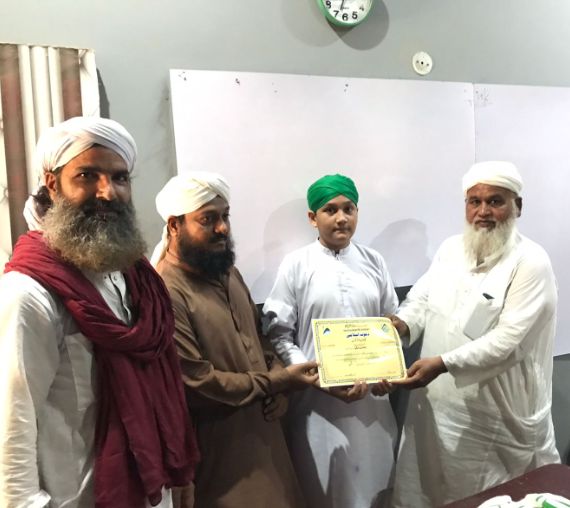
Beyond the formal curriculum, we create an environment that encourages students to embrace Islamic values in their daily lives. We have dedicated spaces for prayer (Salat), and students are encouraged to perform their prayers individually or in congregation during school hours. Special assemblies and events are organized to commemorate important Islamic occasions like Eid and Ramadan, fostering a sense of community and spiritual awareness. During Ramadan, we often have programs that explain the significance of fasting and charity, encouraging students to participate in these acts of worship.
Furthermore, we organize various extracurricular activities that promote Islamic knowledge and practice. These can include Quran recitation competitions, Islamic calligraphy workshops, and interactive sessions on Islamic etiquette and character building. We also invite guest speakers, such as scholars and community leaders, to share their insights and inspire students with their knowledge and experiences. These activities provide a platform for students to explore their faith beyond the classroom and develop a deeper connection to Islamic teachings.
Our school also emphasizes the practical application of Islamic values. We encourage students to demonstrate good manners (Akhlaq), honesty, respect for elders, and compassion towards others, reflecting the teachings of Islam. Community service initiatives are often linked to Islamic principles of charity and helping those in need, allowing students to translate their learning into meaningful action.
By integrating Islamic education into our curriculum, fostering a supportive environment, and offering engaging extracurricular activities, our school strives to instill a love for Islam and its teachings in our students. We aim to equip them not only with academic knowledge but also with strong moral character and a deep understanding of their faith, preparing them to be responsible and contributing members of society.
Our Vision
The Indispensable Blend: Why Children Need Both Worldly and Religious Education
In an increasingly complex world, parents and educators often grapple with the best approach to raising children. While the emphasis on worldly education—sciences, mathematics, literature, and technology—is undeniably crucial for navigating modern life and securing a future, the importance of religious education often gets overlooked or relegated to a secondary role. However, for a child's holistic development, both are not just beneficial but absolutely essential.
Worldly education equips children with the skills and knowledge needed to succeed academically and professionally. It fosters critical thinking, problem-solving abilities, and an understanding of the physical world around them. It opens doors to opportunities, innovation, and progress, allowing children to contribute meaningfully to society and build a comfortable life. Without a solid foundation in secular subjects, children might struggle to find their footing in a competitive global landscape.
Yet, worldly success alone cannot guarantee true fulfillment or a strong moral compass. This is where religious education becomes indispensable. Religious teachings provide a framework for ethics, values, and morality. They instill virtues like honesty, compassion, patience, and respect for others, which are the bedrock of a harmonious society. Learning about faith helps children understand their purpose in life, fostering a sense of identity and belonging that goes beyond material achievements. It teaches them about empathy, forgiveness, and the importance of contributing to the greater good, not just their individual well-being.
Moreover, religious education often offers comfort, guidance, and resilience in the face of life's inevitable challenges. It provides a spiritual anchor, helping children develop inner strength and a sense of hope when confronted with difficulties. It teaches them about perseverance, gratitude, and the importance of maintaining a positive outlook. In a world that can often feel chaotic and unpredictable, a strong spiritual foundation can be a source of profound peace and stability.
Ultimately, integrating both worldly and religious education creates well-rounded individuals. Children who receive both are not only intellectually capable but also morally grounded, empathetic, and spiritually aware. They are better equipped to make ethical decisions, navigate social complexities with grace, and lead lives of purpose and integrity. It's about nurturing the mind, heart, and soul simultaneously, ensuring that our children grow into responsible, compassionate, and successful members of society in the broadest sense.